


Why Aerospace, Defense, and Medical Finishing is Different

Rayco Metal Finishing • April 14, 2026

Aerospace, defense, and medical finishing is driven by strict specifications and higher part criticality, which requires tighter control, documentation, and verification.


Not all finishing work is treated the same. The requirements for a lighting fixture or commercial component are very different from those for an aircraft part or surgical tool.


The difference comes down to how critical the part is and how clearly the expectations are defined. In high-spec industries, there’s very little room for interpretation.

Spec-Driven Manufacturing

In aerospace, defense, and medical work, parts are almost always tied to a specific standard.


Instead of a general callout like “passivate,” you’ll see something like:


  • Passivation per AMS specification
  • Anodizing to a defined type and class


These specs outline:


  • Required coating thickness
  • Performance expectations
  • Quality control requirements


Everyone involved is working from the same set of instructions.

Why Compliance Matters

These specifications remove ambiguity.


The finish either:


  • Meets the defined requirements
  • Or it doesn’t


There’s no guesswork around appearance or performance because the expectations are already documented.

Higher Risk Applications

The end use of the part plays a big role.


Components used in:


  • Aircraft systems
  • Engine assemblies
  • Surgical instruments


Carry a higher level of responsibility. Because of that, the finishing process needs to be consistent and well-documented from start to finish.

In high-spec industries, the process is more structured because the expectations are clearly defined. That clarity makes it easier to maintain consistency and ensures that every part meets the required standard before it moves forward.

Frequently Asked Questions

  • What is AS9100?

    It is a Quality Management System (QMS) that expands on ISO 9001 to apply a specific set of aerospace standards, heavily focusing on quality, consistency, and repeatability.

  • Why are specs required?

    Specifications take the subjectivity out of the process; either the finish is compliant with the spec's predefined expectations, or it is not.

  • How does Rayco ensure compliance?

     By maintaining an in-house lab to run solution analysis (checking concentration, pH, and temperatures) and utilizing equipment like a Fisher scope for precise film thickness measurement.

  • What happens if a part doesn't meet the spec?

    If a part fails to meet the predefined guidelines for thickness, adhesion, or salt spray hours, it is considered non-conforming.

Need a reliable finishing partner that hits deadlines?

Get a fast, accurate quote with transparent pricing.

A worker dips a metallic, triangular part into a dark liquid bath in an industrial setting.
By Rayco Metal Finishing April 14, 2026
Learn exactly what happens when you send parts for metal finishing—from receiving and contract review to processing, QC, and delivery.

A person wearing protective eyewear and gloves holds a metal rack of small parts near steam in an industrial workshop.
By Rayco Metal Finishing April 14, 2026
Not sure which metal finishing process to use? Compare electropolishing, passivation, anodizing, and plating with real-world examples.

Close-up of a white device panel with a black horizontal handle and a
By Rayco Metal Finishing April 14, 2026
Most issues in metal finishing come down to unclear specifications, incorrect callouts, or missing information—not the processing itself. When a job runs into delays or needs to be redone, it’s rarely because the finishing process failed. More often, something was off before the parts ever hit the tanks.  In a job shop environment, small details matter. If those details aren’t clearly defined upfront, the job either gets held up for clarification or moves forward with assumptions—which can lead to rework.

Metallic, brass-colored industrial fasteners hang in rows, suspended by hooks in a manufacturing facility.
By Rayco Metal Finishing April 14, 2026
Understand what impacts metal finishing costs, including quantity, part geometry, material, and masking requirements.
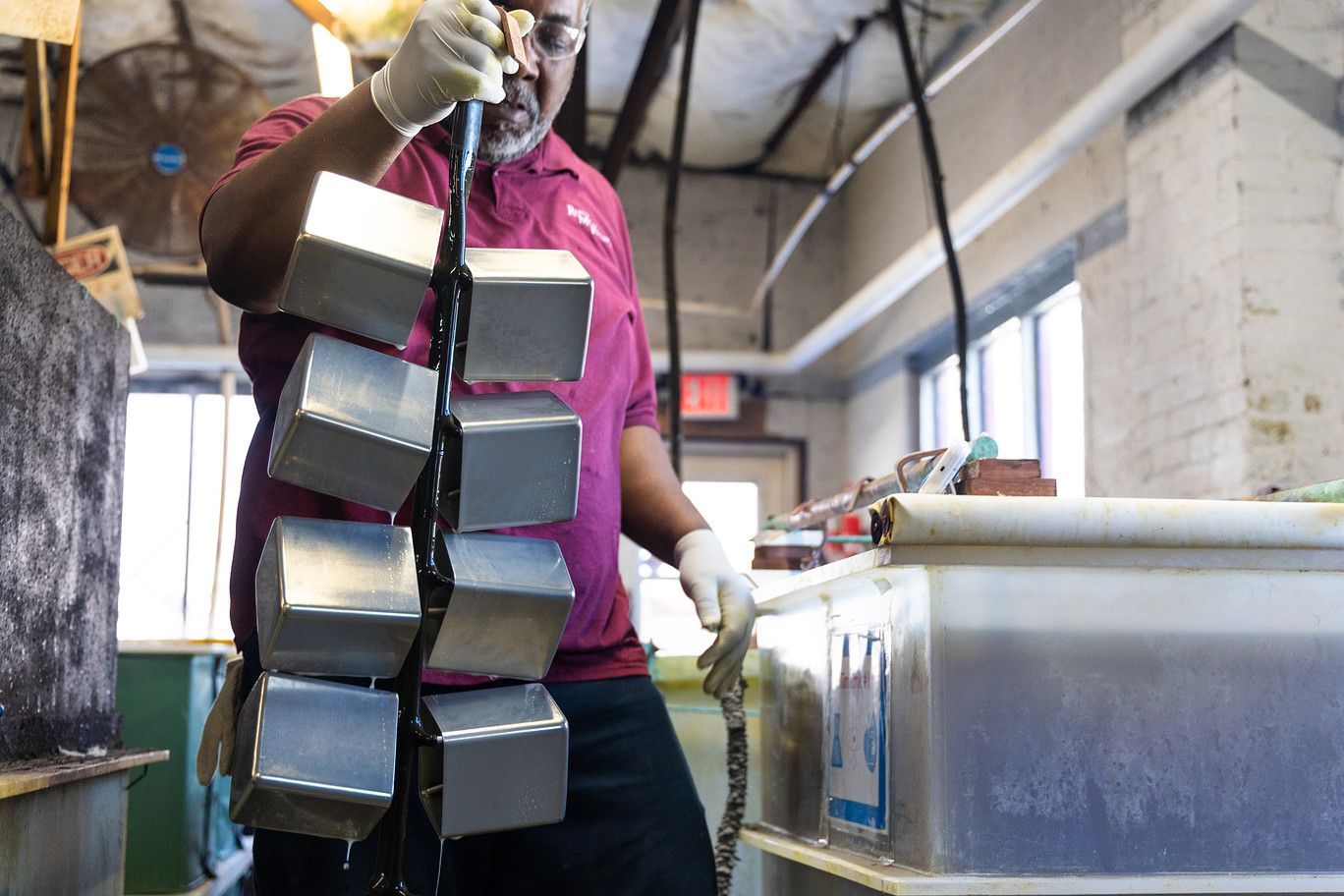
A person in a maroon shirt and safety gloves holds a vertical rack of eight metal cubes over an industrial fluid tank.
By Rayco Metal Finishing April 14, 2026
Learn what impacts metal finishing lead times and how to ensure your parts stay on schedule.
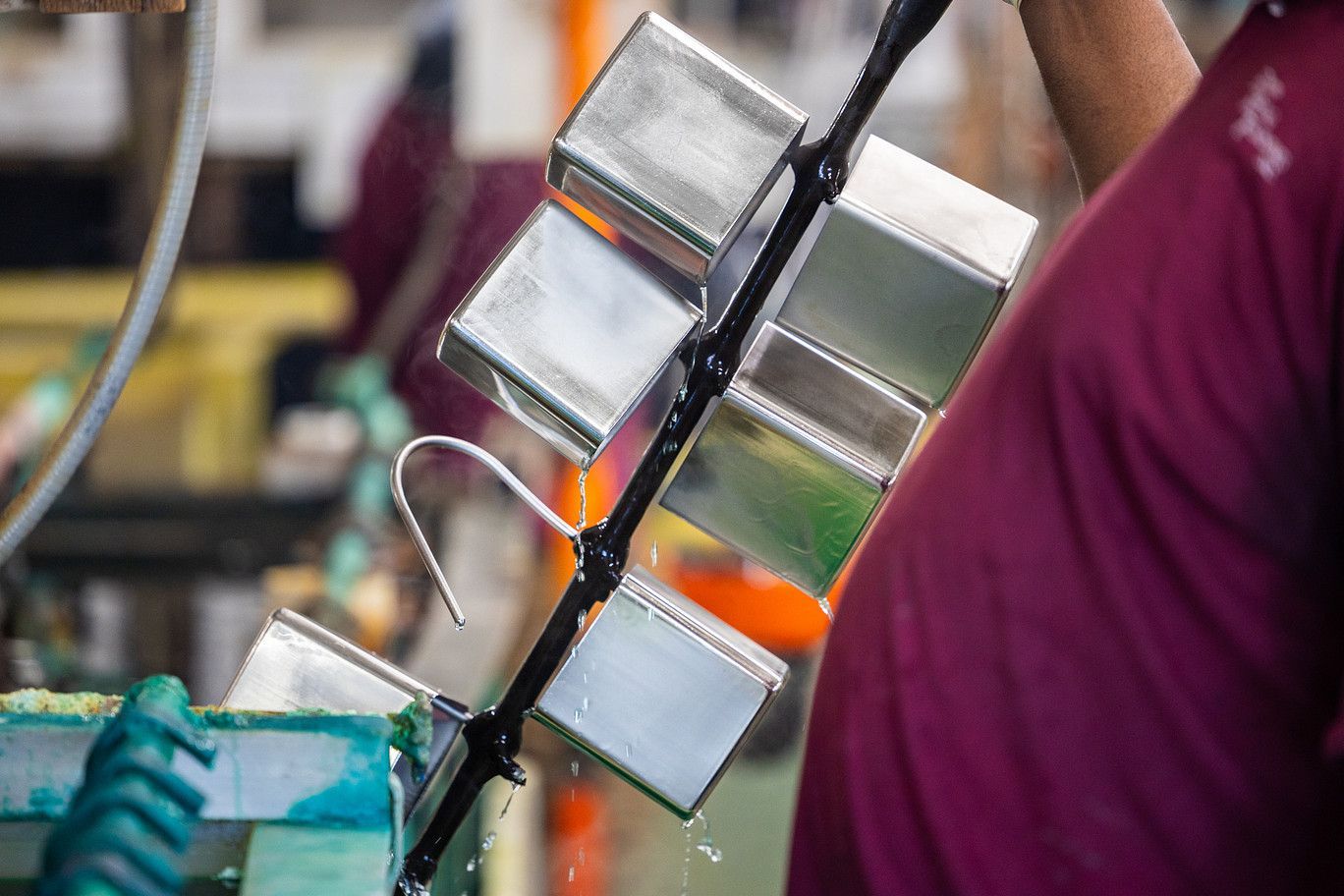
A person in a maroon shirt holds a metal rack of shiny, rectangular containers dripping water in an industrial setting.
By Rayco Metal Finishing April 14, 2026
Learn how humidity, salt exposure, and environment influence metal finishing decisions and corrosion resistance.
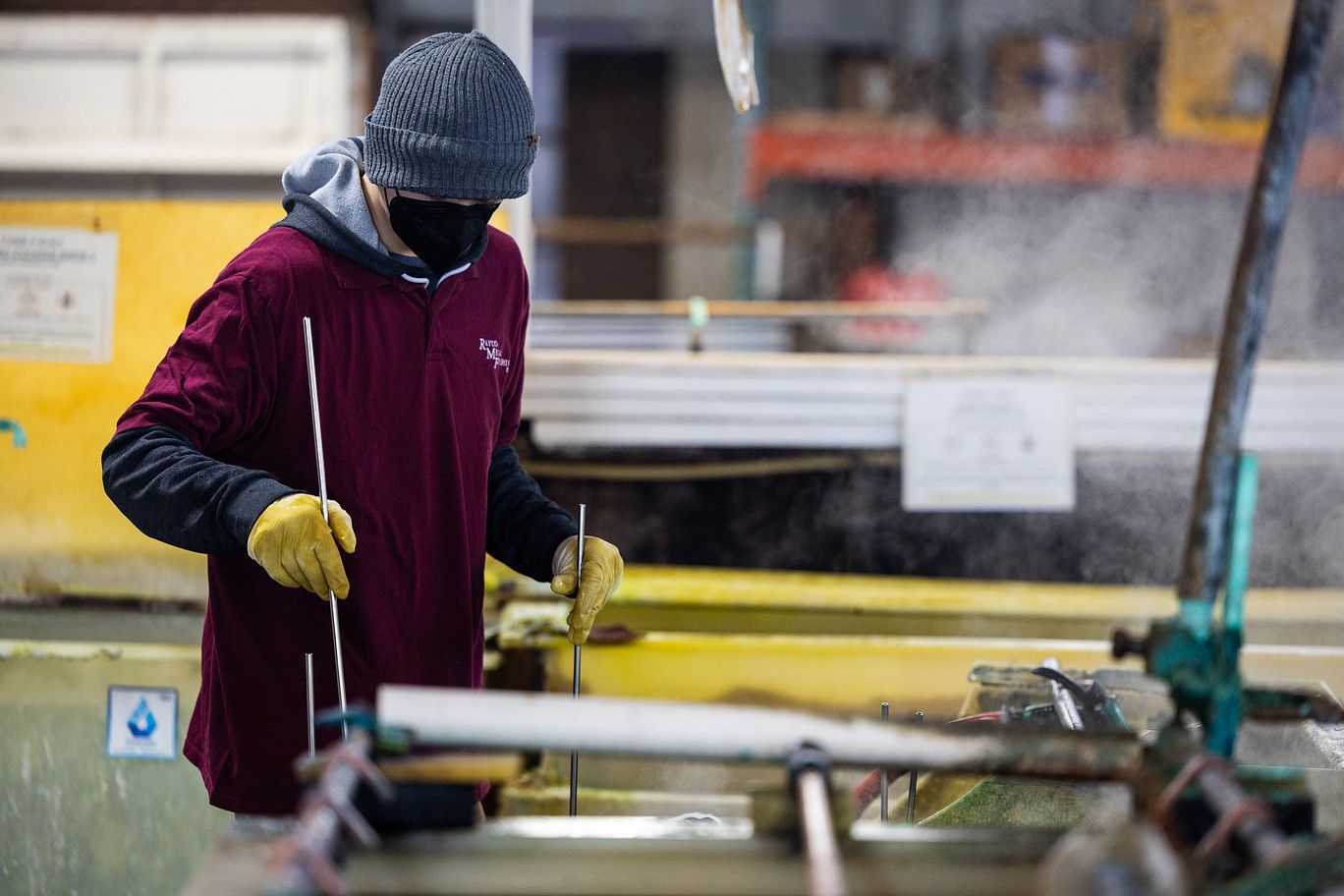
A person wearing a beanie, mask, and yellow gloves holds thin rods over a steaming industrial vat in a workshop.
By Rayco Metal Finishing April 14, 2026
Learn the most common plating failures like peeling, cracking, and dull finishes—and how to avoid them.