


How Corrosion and Environment Impact Metal Finishing Decisions

Rayco Metal Finishing • April 14, 2026

Environmental exposure—such as humidity, temperature, and salt—determines how much corrosion protection a part needs and which finishing process is appropriate.


Where a part is used has a direct impact on how it should be finished. The same material can perform very differently depending on the environment it’s exposed to.


Ignoring those conditions usually leads to premature corrosion or underperforming finishes.

Humidity & Oxidation

In high-humidity conditions, especially during Northeast summers, uncoated metal is at risk.


Steel in particular can develop flash rust quickly when exposed to:


  • High temperatures
  • High moisture levels


That’s why most parts require some form of protective treatment before they’re put into service.

Salt Exposure & Marine Environments

Salt creates a much more aggressive environment.

Parts exposed to:


  • Coastal air
  • Marine applications
  • Constant salt spray


Require stronger corrosion protection. Standard finishes may not hold up under those conditions without additional protection or higher performance requirements.

Indoor vs Outdoor Applications

Not every part needs the same level of protection.


  • Indoor components typically face minimal exposure
  • Outdoor parts deal with moisture, temperature changes, and UV exposure


The finishing process should match the environment, not exceed or fall short of what’s needed.

Finishing decisions are easier to make when the environment is clearly defined. Matching the level of protection to real-world conditions helps ensure the part performs as expected over time.

Frequently Asked Questions

  • What finish is best for coastal environments?

    Finishes must be chosen based on the severity of the environment, requiring high durability against constant salt spray and UV rays.

  • How many salt spray hours do I need?

    The requirement depends heavily on the specification and the environment, ranging anywhere from 36 to 1,000 hours of resistance.

  • Is corrosion resistance considered a functional benefit?

    Yes. While aesthetics matter, the bulk of finishing (like zinc plating or passivating to remove free iron) is primarily done for functional corrosion protection.

  • Does the Northeast climate affect parts specifically?

    he way steel reacts to moisture is universal, but the high humidity of Northeast summers makes untreated metal highly susceptible to flash rust.

Need a reliable finishing partner that hits deadlines?

Get a fast, accurate quote with transparent pricing.

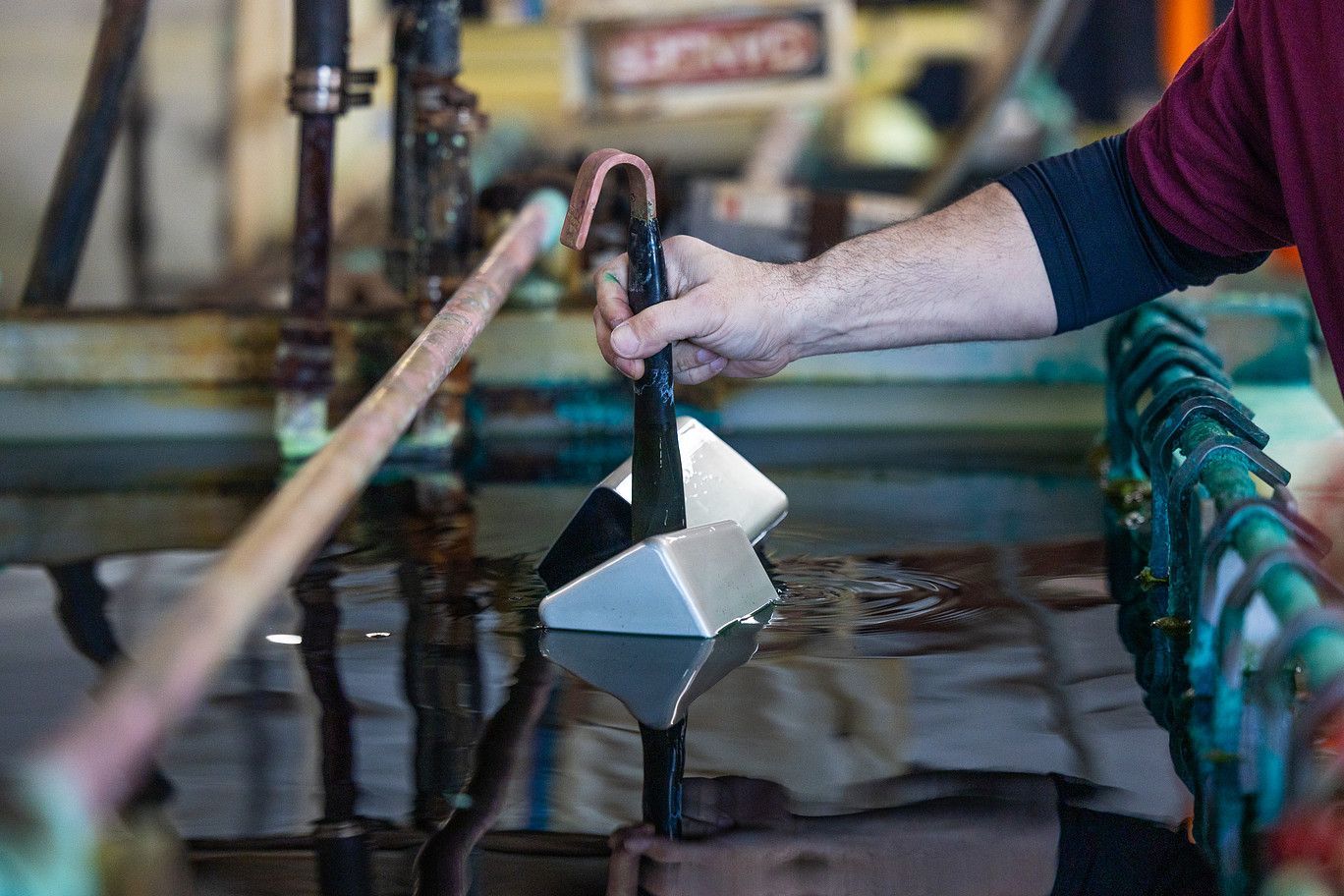
A worker dips a metallic, triangular part into a dark liquid bath in an industrial setting.
By Rayco Metal Finishing April 14, 2026
Learn exactly what happens when you send parts for metal finishing—from receiving and contract review to processing, QC, and delivery.
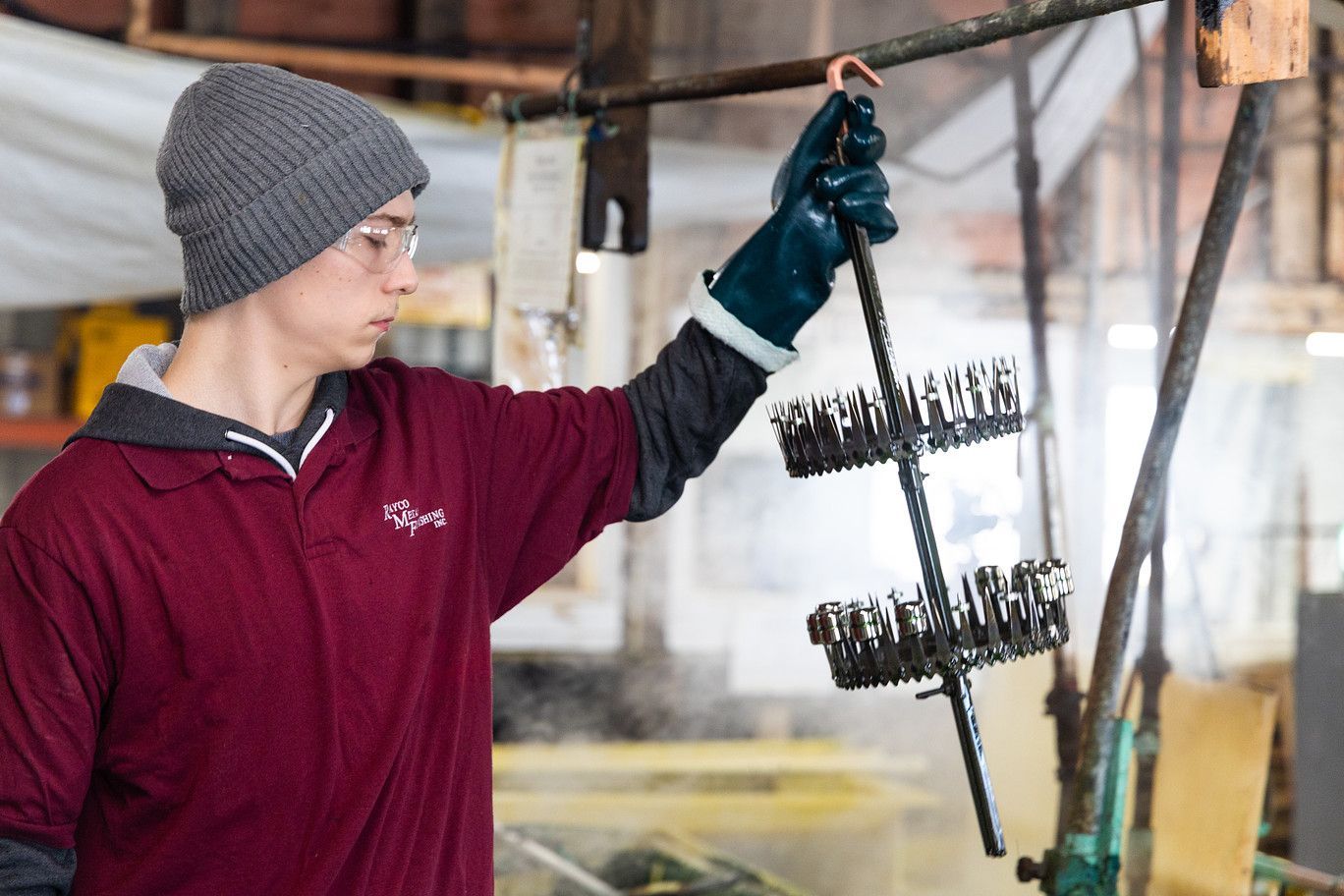
A person wearing protective eyewear and gloves holds a metal rack of small parts near steam in an industrial workshop.
By Rayco Metal Finishing April 14, 2026
Not sure which metal finishing process to use? Compare electropolishing, passivation, anodizing, and plating with real-world examples.
Close-up of a white device panel with a black horizontal handle and a
By Rayco Metal Finishing April 14, 2026
Most issues in metal finishing come down to unclear specifications, incorrect callouts, or missing information—not the processing itself. When a job runs into delays or needs to be redone, it’s rarely because the finishing process failed. More often, something was off before the parts ever hit the tanks.  In a job shop environment, small details matter. If those details aren’t clearly defined upfront, the job either gets held up for clarification or moves forward with assumptions—which can lead to rework.
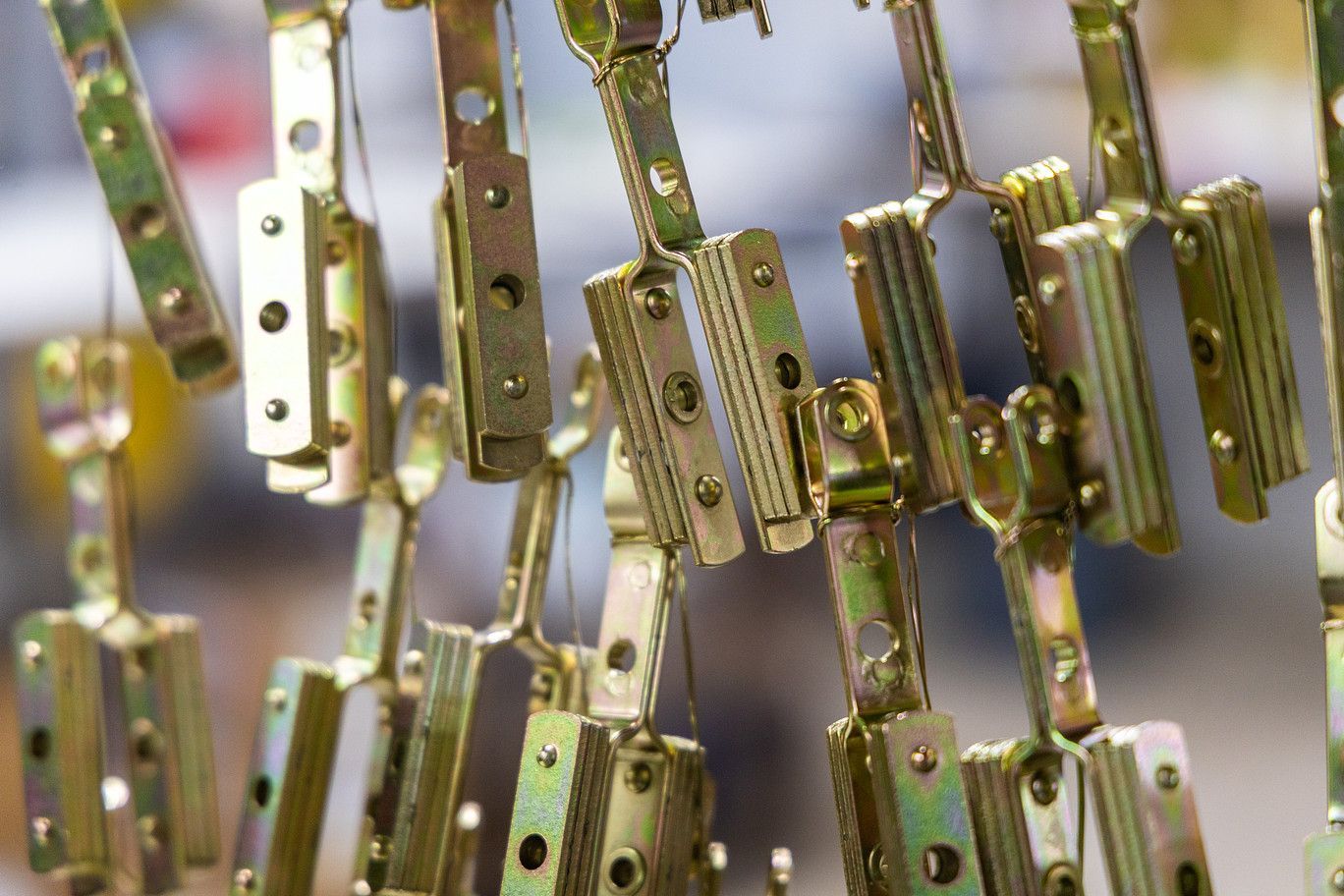
Metallic, brass-colored industrial fasteners hang in rows, suspended by hooks in a manufacturing facility.
By Rayco Metal Finishing April 14, 2026
Understand what impacts metal finishing costs, including quantity, part geometry, material, and masking requirements.
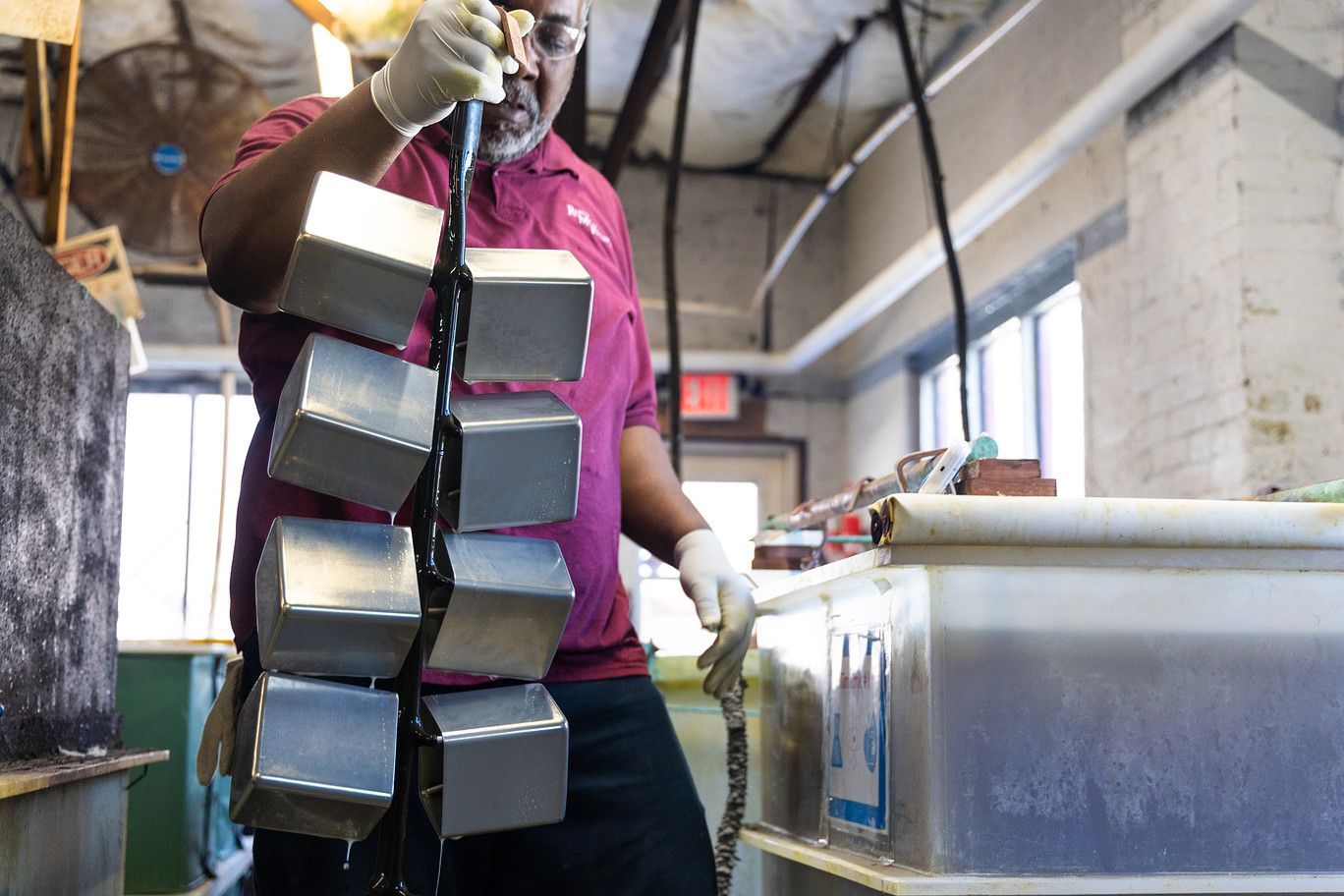
A person in a maroon shirt and safety gloves holds a vertical rack of eight metal cubes over an industrial fluid tank.
By Rayco Metal Finishing April 14, 2026
Learn what impacts metal finishing lead times and how to ensure your parts stay on schedule.

A person in a red polo and beanie works in a smoky industrial workshop, stirring a dark vessel with a metal tool.
By Rayco Metal Finishing April 14, 2026
Discover why aerospace and medical metal finishing requires strict compliance, specs, and quality control.
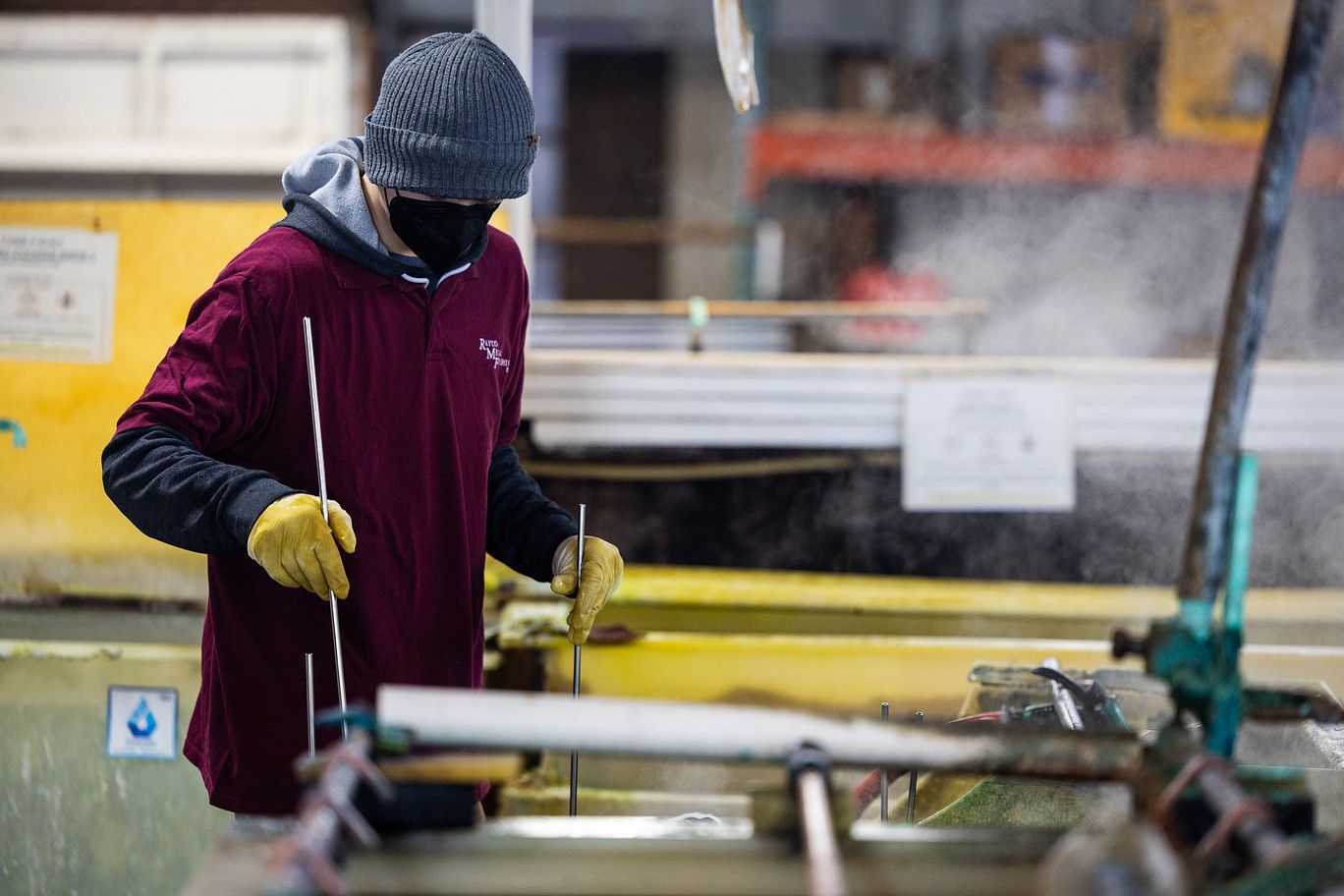
A person wearing a beanie, mask, and yellow gloves holds thin rods over a steaming industrial vat in a workshop.
By Rayco Metal Finishing April 14, 2026
Learn the most common plating failures like peeling, cracking, and dull finishes—and how to avoid them.