


What Happens During the Metal Finishing Process? (Step-by-Step Guide)

Rayco Metal Finishing • April 14, 2026

The metal finishing process at Rayco follows a structured, highly controlled workflow—from receiving and contract review through processing, inspection, and delivery—designed to ensure accuracy, consistency, and compliance at every step.


When parts are sent out for metal finishing, there’s often a gap between expectation and understanding. Engineers and purchasing agents know what result they need—but not always what happens in between.


At Rayco Metal Finishing, the process is built around control, traceability, and verification. Every step exists to reduce risk, prevent miscommunication, and ensure that the final product meets both functional and cosmetic expectations.

Step 1: Receiving & Order Entry

When parts arrive at the facility, the order is first entered by the front office to initiate the tracking process.

Step 2: Contract Review & Spec Verification

This is a critical check and balance phase where Rayco verifies the customer's specifications, material inventory, and drawing revision levels. Once accepted and passed through contract review, the job is released to the floor.

Step 3: Production, QR Tracking & Tank Processing

To maintain strict quality control, all software now runs off QR codes.


Labels with QR codes are printed and go directly with the jobs. The floor manager uses this system to move parts to the correct treatment section, such as aluminum or ferrous metals processing.


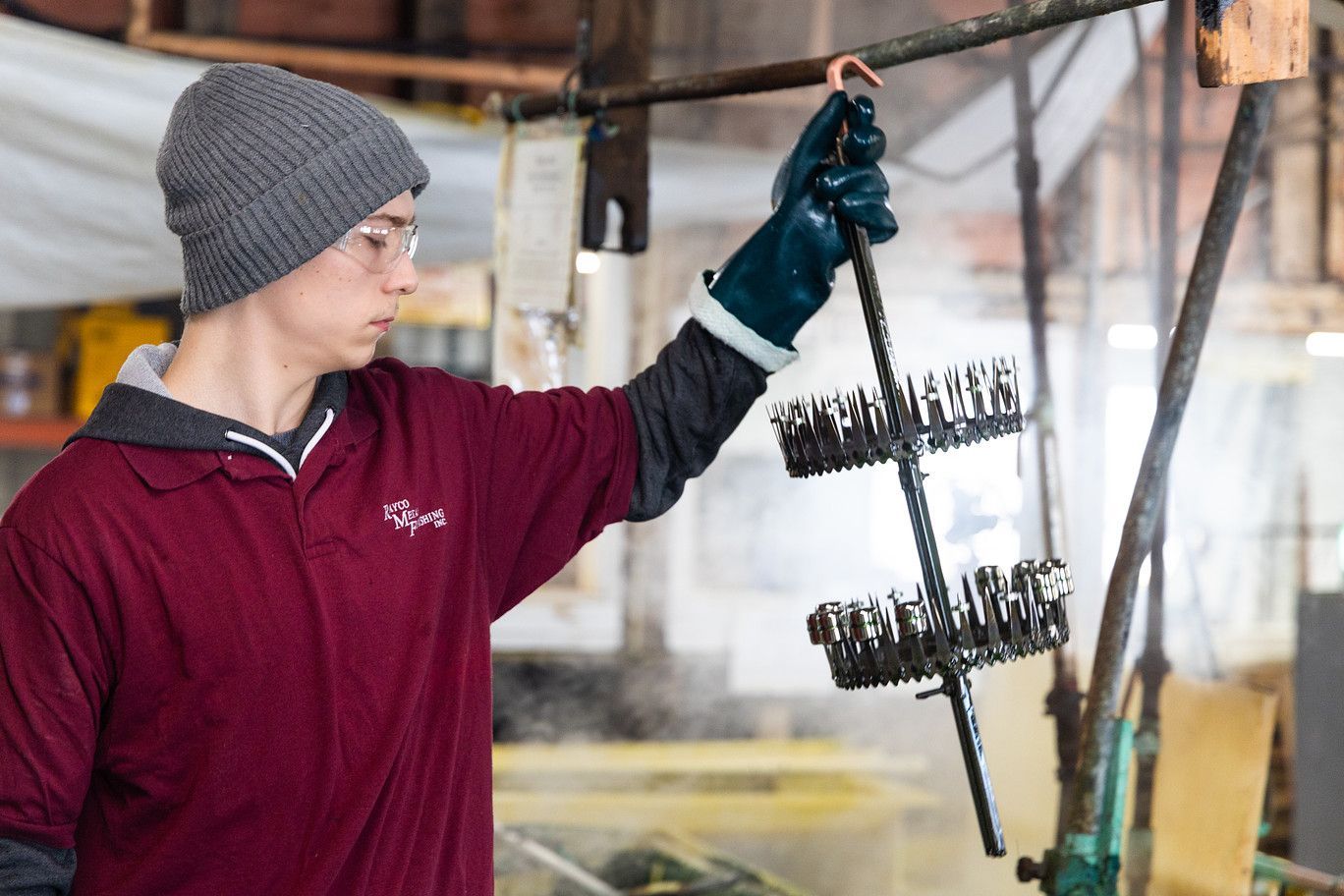
Operators then move the parts from a staging node into an operation node, which dictates a specific chemical tank sequencing.

Step 4: Quality Control & Testing

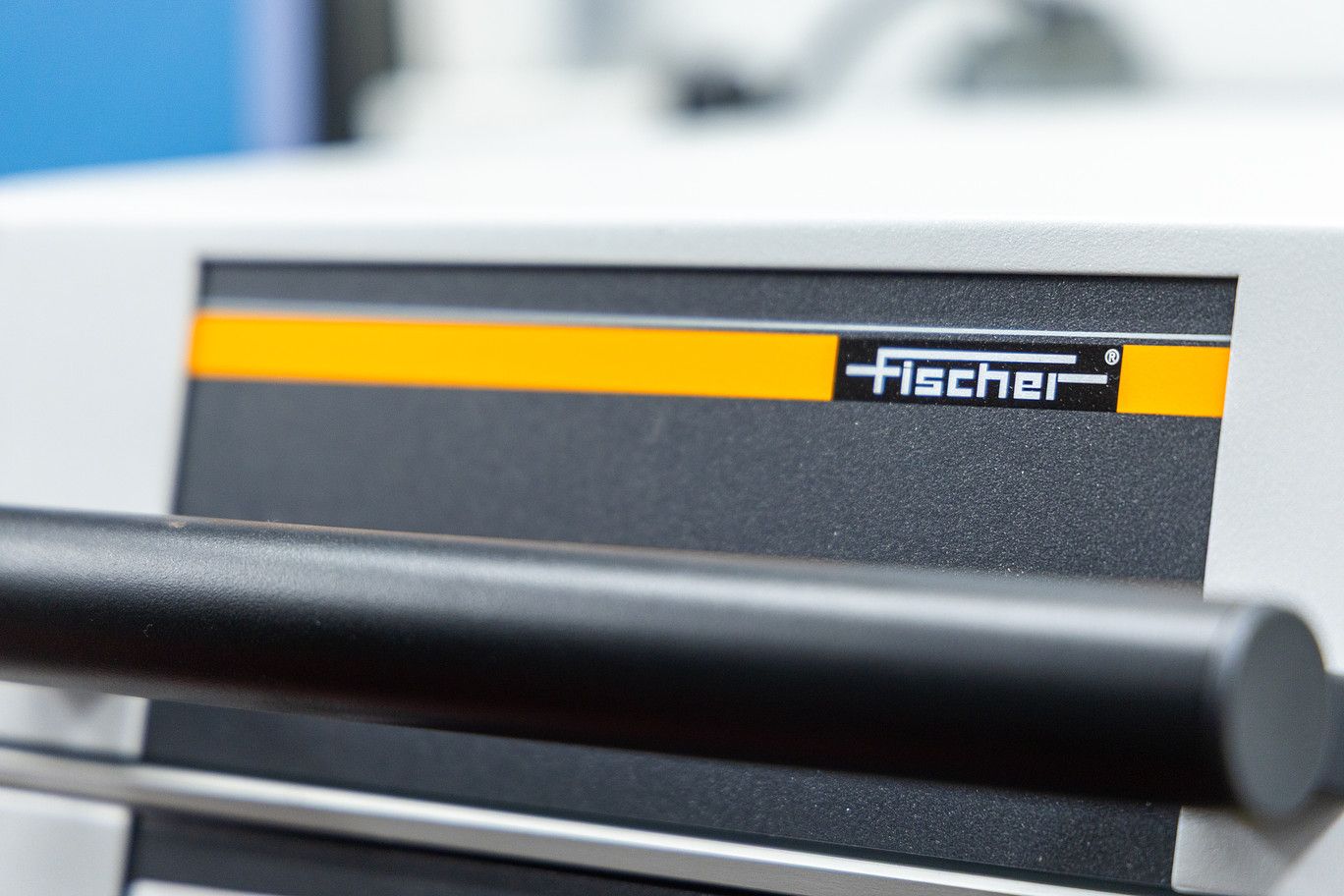
After tank sequencing, parts are blown off and dried before moving through QC. They undergo strict Quality Control testing, which may include utilizing a Fisher scope to measure film thickness or gloss meters to ensure the finish meets the requested standard.

Step 5: Packaging & Delivery

Once the parts have passed all rigorous QC inspections and meet the exact specifications outlined in the contract review, they move to the final stage . The parts are carefully packaged to protect their new finish, invoiced, and prepared for secure delivery back to the customer.

A well-run finishing process isn’t just about chemistry—it’s about control, communication, and consistency.


From the moment parts arrive to the moment they ship, every step is designed to remove ambiguity and ensure the result matches exactly what the customer intended. The more clearly that intent is defined upfront, the smoother—and more predictable—the entire process becomes.

Frequently Asked Questions

  • Where do delays typically occur?

    Delays most often stem from capacity issues—such as the shop getting inundated all at one time—or from a lack of specific information communicated on the customer's end.

  • What causes mistakes in metal finishing?

    Most mistakes are due to the communication piece, such as when a customer’s cosmetic expectations are not clearly defined or referenced against a standard.

  • What role does software play in your process?

    Rayco uses software driven by QR codes on printed labels to track jobs as they move from staging areas into specific operation nodes.

  • How do you handle materials for different jobs?

    Materials are not ordered on a job basis; instead, Rayco keeps materials in inventory by the drum, ensuring tanks stay up and running 24/7 so jobs are never delayed by supply shortages.

Need a reliable finishing partner that hits deadlines?

Get a fast, accurate quote with transparent pricing.

A person wearing protective eyewear and gloves holds a metal rack of small parts near steam in an industrial workshop.
By Rayco Metal Finishing April 14, 2026
Not sure which metal finishing process to use? Compare electropolishing, passivation, anodizing, and plating with real-world examples.
Close-up of a white device panel with a black horizontal handle and a
By Rayco Metal Finishing April 14, 2026
Most issues in metal finishing come down to unclear specifications, incorrect callouts, or missing information—not the processing itself. When a job runs into delays or needs to be redone, it’s rarely because the finishing process failed. More often, something was off before the parts ever hit the tanks.  In a job shop environment, small details matter. If those details aren’t clearly defined upfront, the job either gets held up for clarification or moves forward with assumptions—which can lead to rework.
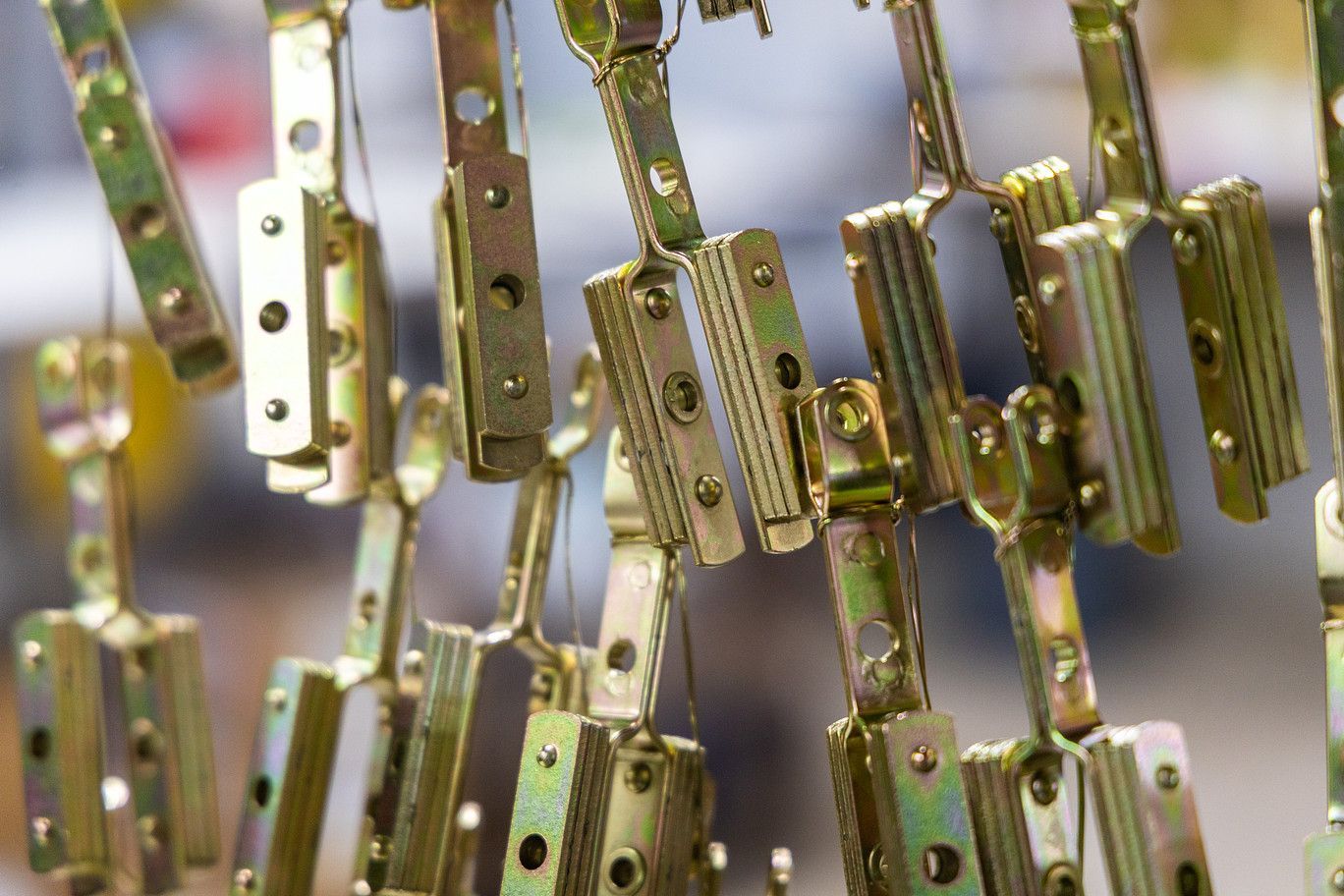
Metallic, brass-colored industrial fasteners hang in rows, suspended by hooks in a manufacturing facility.
By Rayco Metal Finishing April 14, 2026
Understand what impacts metal finishing costs, including quantity, part geometry, material, and masking requirements.
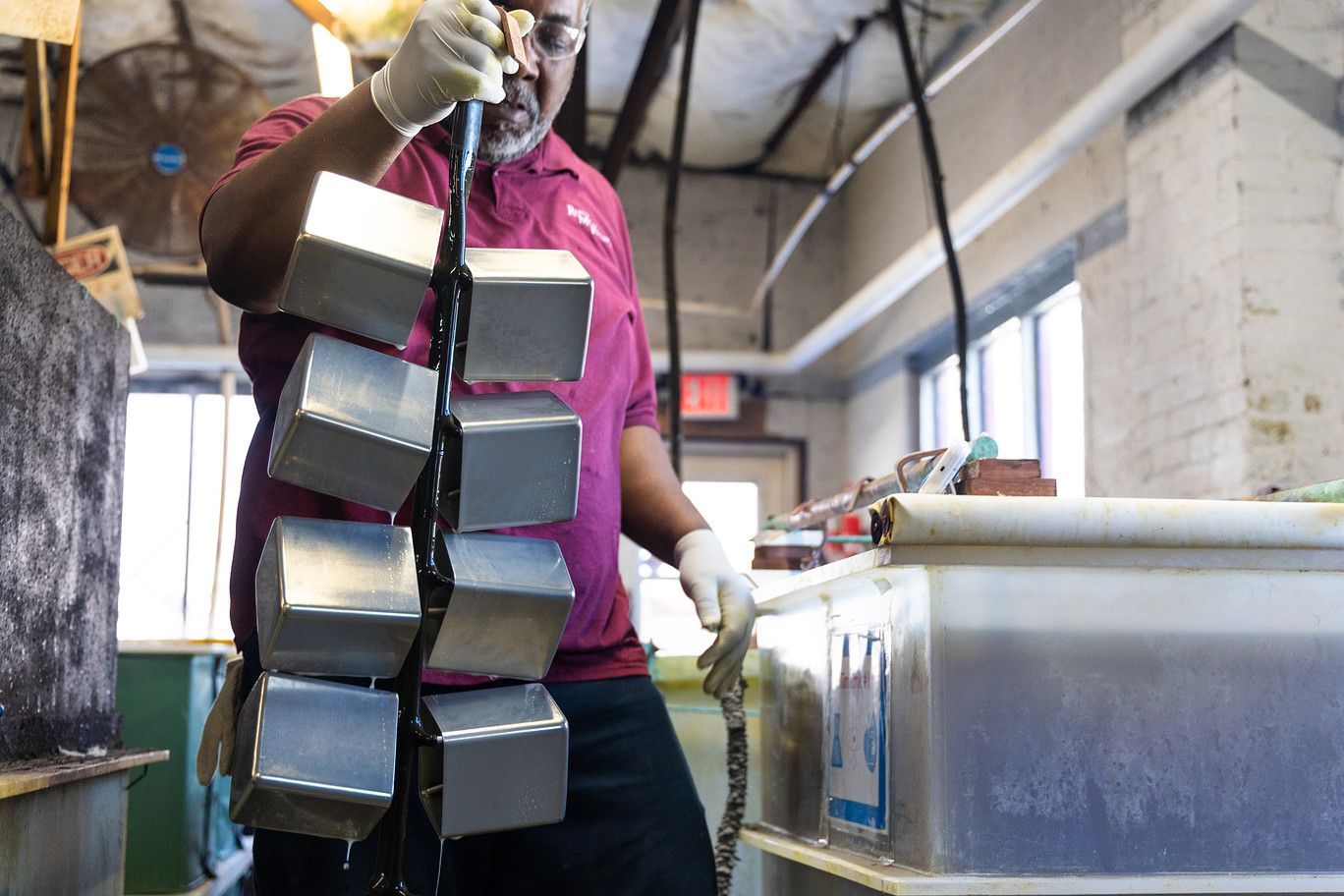
A person in a maroon shirt and safety gloves holds a vertical rack of eight metal cubes over an industrial fluid tank.
By Rayco Metal Finishing April 14, 2026
Learn what impacts metal finishing lead times and how to ensure your parts stay on schedule.

A person in a red polo and beanie works in a smoky industrial workshop, stirring a dark vessel with a metal tool.
By Rayco Metal Finishing April 14, 2026
Discover why aerospace and medical metal finishing requires strict compliance, specs, and quality control.
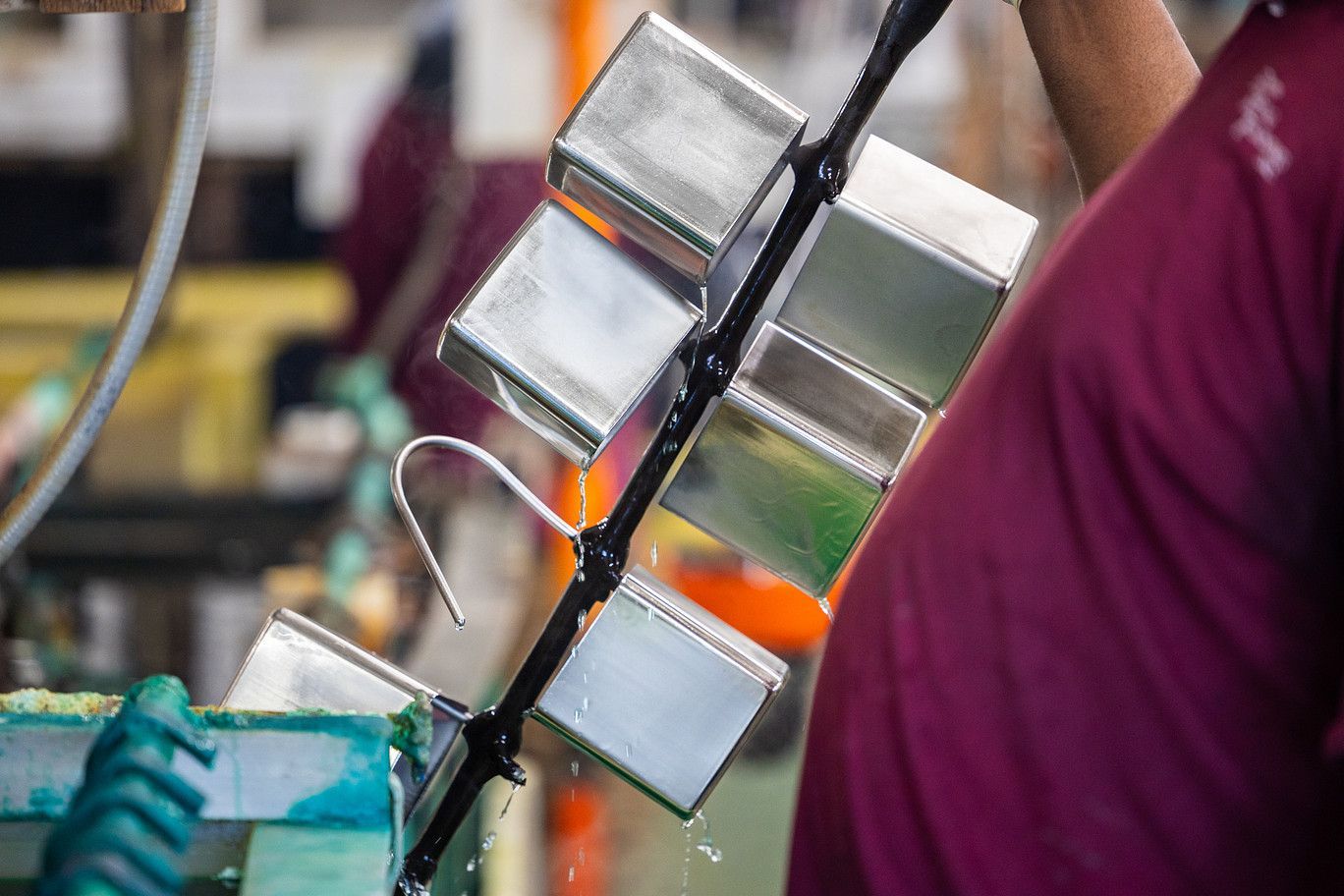
A person in a maroon shirt holds a metal rack of shiny, rectangular containers dripping water in an industrial setting.
By Rayco Metal Finishing April 14, 2026
Learn how humidity, salt exposure, and environment influence metal finishing decisions and corrosion resistance.
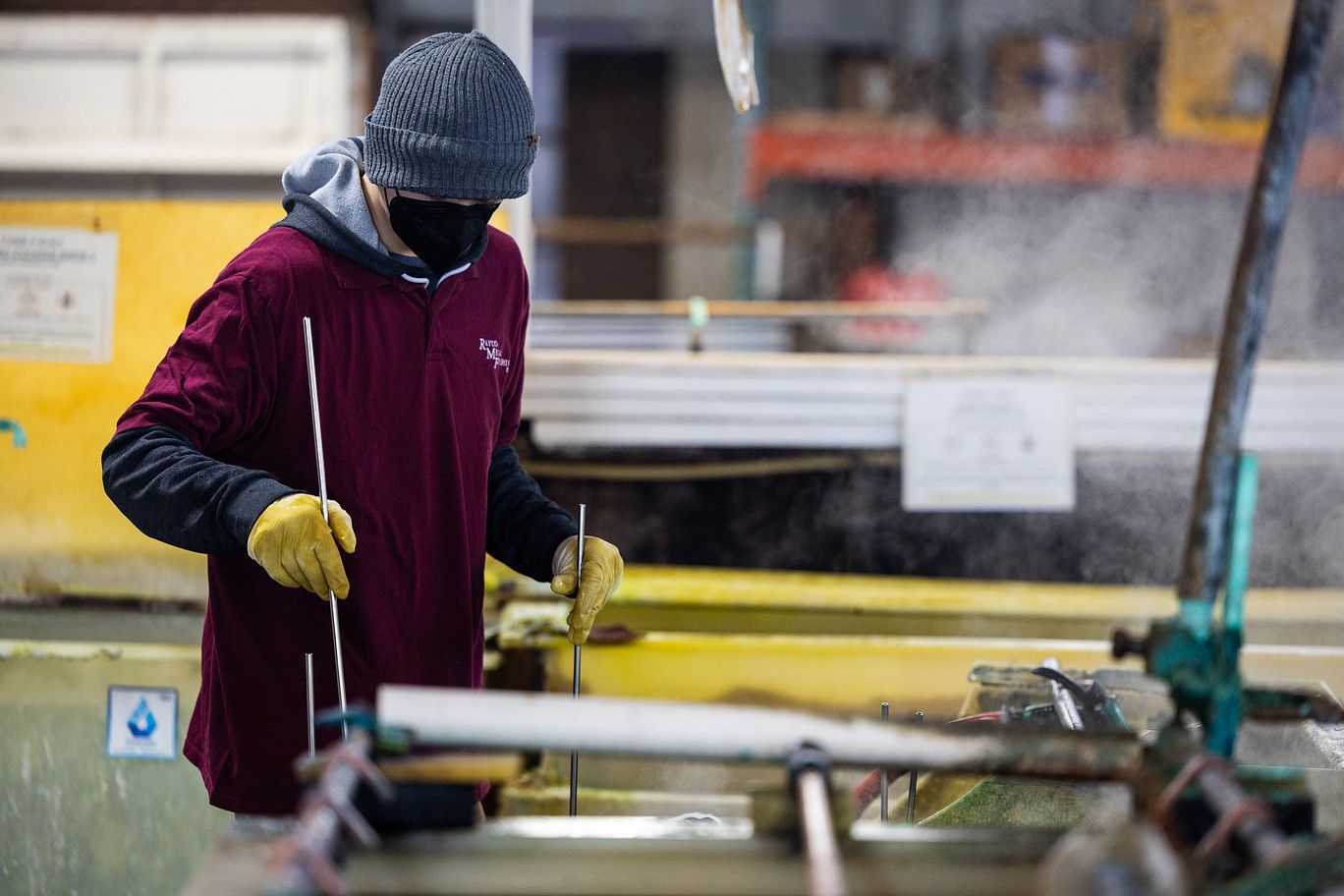
A person wearing a beanie, mask, and yellow gloves holds thin rods over a steaming industrial vat in a workshop.
By Rayco Metal Finishing April 14, 2026
Learn the most common plating failures like peeling, cracking, and dull finishes—and how to avoid them.