


What Affects the Cost of Metal Finishing? (Complete Pricing Breakdown)

Rayco Metal Finishing • April 14, 2026

Cost is mainly driven by quantity, part geometry, and material, along with any added requirements like masking or special handling.


Pricing in metal finishing isn’t arbitrary, but it can feel that way without context. Two parts that look similar can have very different costs depending on how they’re processed.


Understanding what goes into pricing makes it easier to plan ahead and avoid surprises—especially when moving from prototype to production.

Quantity & Batch Size Economics

Rayco enforces minimum charges for small batches, meaning the higher the quantity, the lower the unit cost.


  • 10 parts: You might pay $15.00 a part due to a $150 minimum charge.
  • 100 parts: The price might drop to $2.50 a part.
  • 1,000 parts: The price goes down exponentially, potentially hitting 80 cents a part.

Part Geometry & Complexity

The geometry and complexity of a part greatly impact processing. Very small parts might require special mesh screens so they don't fall through during processing, adding to the setup effort.

Material Type & Weight

Different materials process differently, and factors like thickness and weight also come into play.


Heavier or denser parts can require more effort to handle, while certain materials may require more controlled processing conditions.

Masking & Special Requirements

Any manual step added to the process increases cost.


A common example is masking—where specific areas of a part must not be coated. That requires extra labor and setup, especially on more complex geometries.

Most pricing factors come back to how much time and handling a job requires. Larger quantities, simpler geometries, and fewer special requirements generally lead to more cost-efficient processing.

Frequently Asked Questions

  • Why is small batch plating expensive?

    Small batches are subject to minimum charges to cover the initial setup of getting a job going.

  • How can I reduce finishing costs?

    Sending a higher quantity of parts lowers the unit cost exponentially. Removing extra requirements, like masking, also helps.

  • Does the physical size of the part affect the cost?

    Yes, because maximum size is dictated by process tanks. For example, Rayco can process parts 6 or 7 feet long for zinc, but only 18 inches for black anodize.

  • Do you charge more for expedited turnaround?

    Yes, expedited lead times (1-2 days) are billed at one and a half times the standard unit cost.

Need a reliable finishing partner that hits deadlines?

Get a fast, accurate quote with transparent pricing.

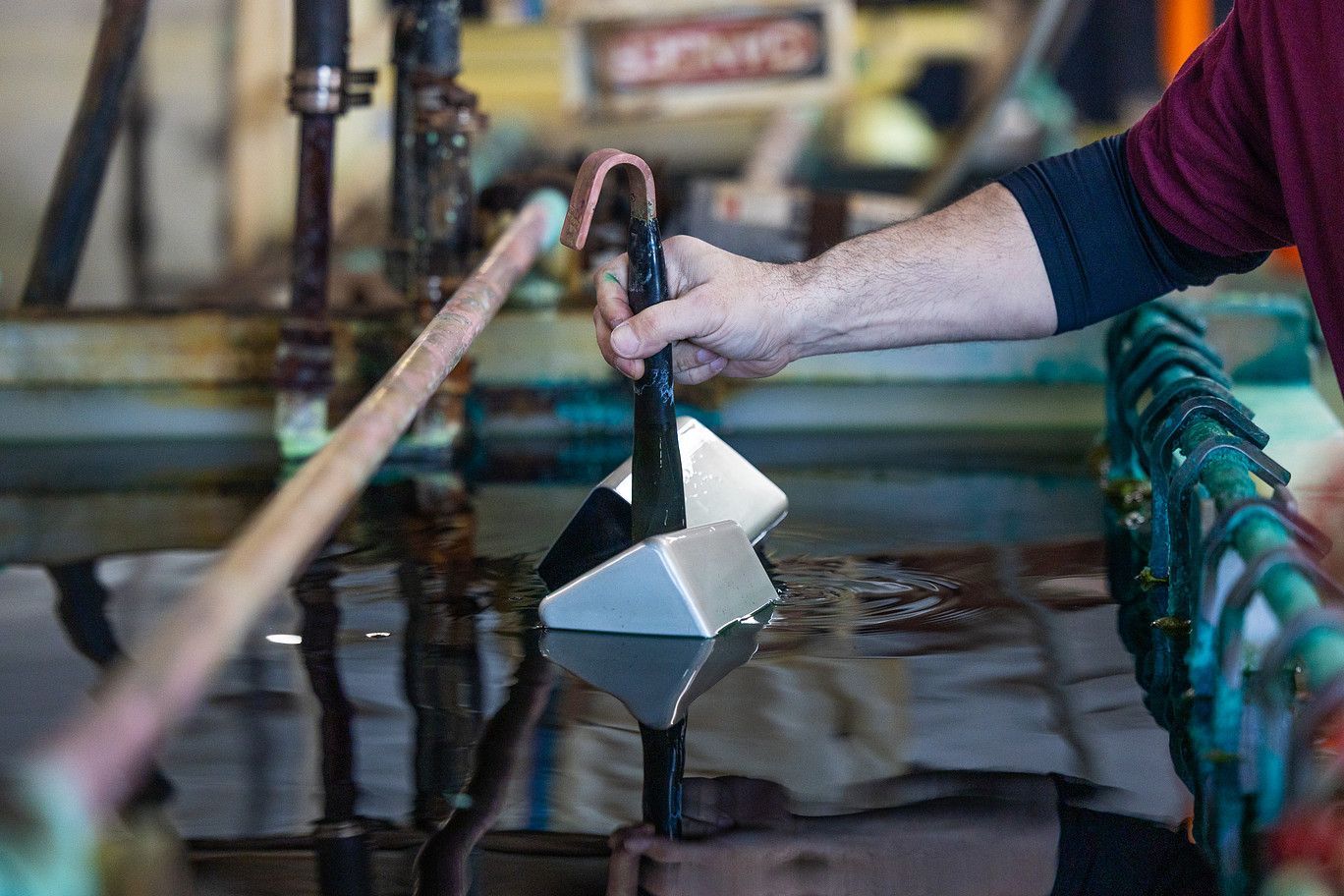
A worker dips a metallic, triangular part into a dark liquid bath in an industrial setting.
By Rayco Metal Finishing April 14, 2026
Learn exactly what happens when you send parts for metal finishing—from receiving and contract review to processing, QC, and delivery.
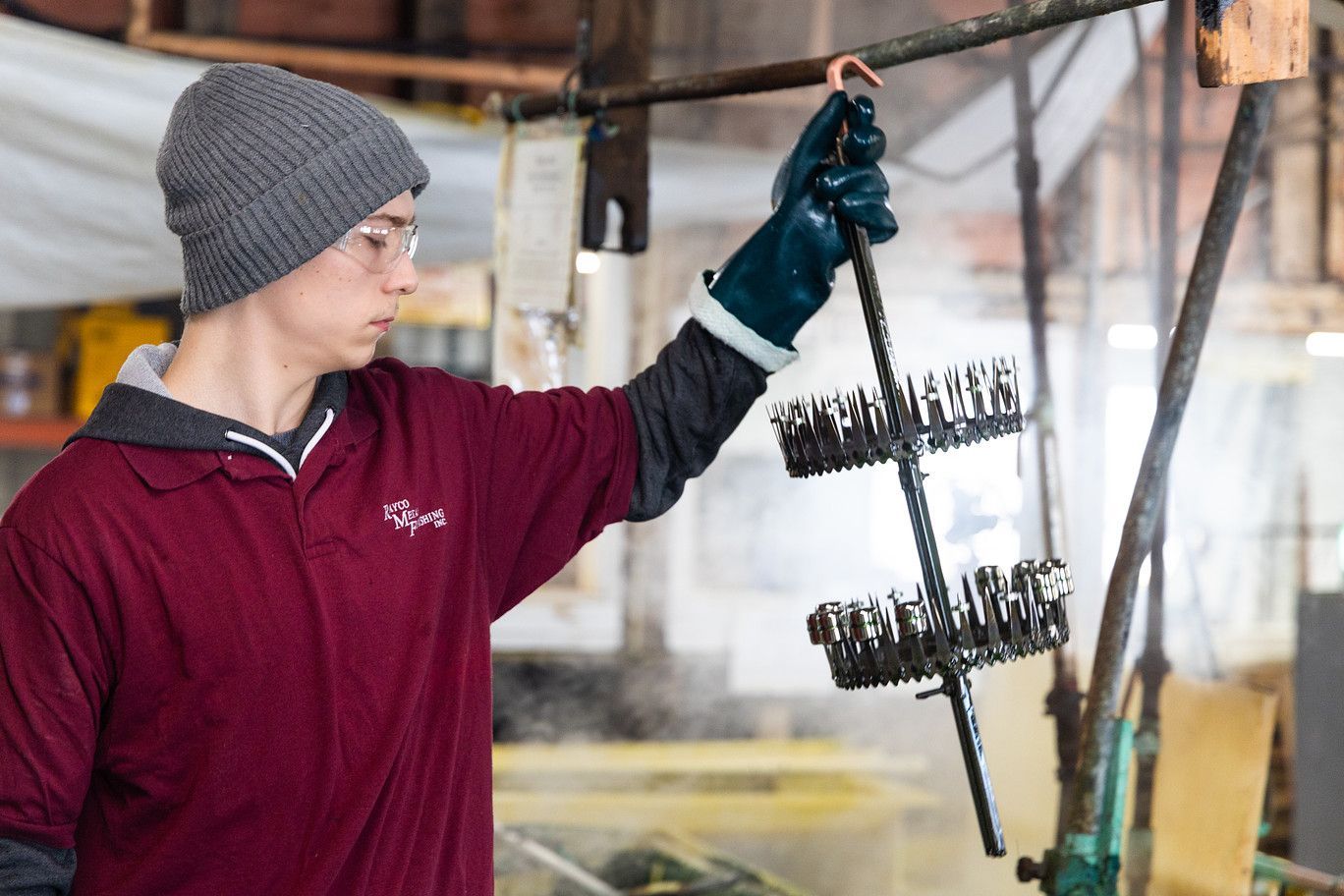
A person wearing protective eyewear and gloves holds a metal rack of small parts near steam in an industrial workshop.
By Rayco Metal Finishing April 14, 2026
Not sure which metal finishing process to use? Compare electropolishing, passivation, anodizing, and plating with real-world examples.
Close-up of a white device panel with a black horizontal handle and a
By Rayco Metal Finishing April 14, 2026
Most issues in metal finishing come down to unclear specifications, incorrect callouts, or missing information—not the processing itself. When a job runs into delays or needs to be redone, it’s rarely because the finishing process failed. More often, something was off before the parts ever hit the tanks.  In a job shop environment, small details matter. If those details aren’t clearly defined upfront, the job either gets held up for clarification or moves forward with assumptions—which can lead to rework.
A person in a maroon shirt and safety gloves holds a vertical rack of eight metal cubes over an industrial fluid tank.
By Rayco Metal Finishing April 14, 2026
Learn what impacts metal finishing lead times and how to ensure your parts stay on schedule.

A person in a red polo and beanie works in a smoky industrial workshop, stirring a dark vessel with a metal tool.
By Rayco Metal Finishing April 14, 2026
Discover why aerospace and medical metal finishing requires strict compliance, specs, and quality control.
A person in a maroon shirt holds a metal rack of shiny, rectangular containers dripping water in an industrial setting.
By Rayco Metal Finishing April 14, 2026
Learn how humidity, salt exposure, and environment influence metal finishing decisions and corrosion resistance.
A person wearing a beanie, mask, and yellow gloves holds thin rods over a steaming industrial vat in a workshop.
By Rayco Metal Finishing April 14, 2026
Learn the most common plating failures like peeling, cracking, and dull finishes—and how to avoid them.